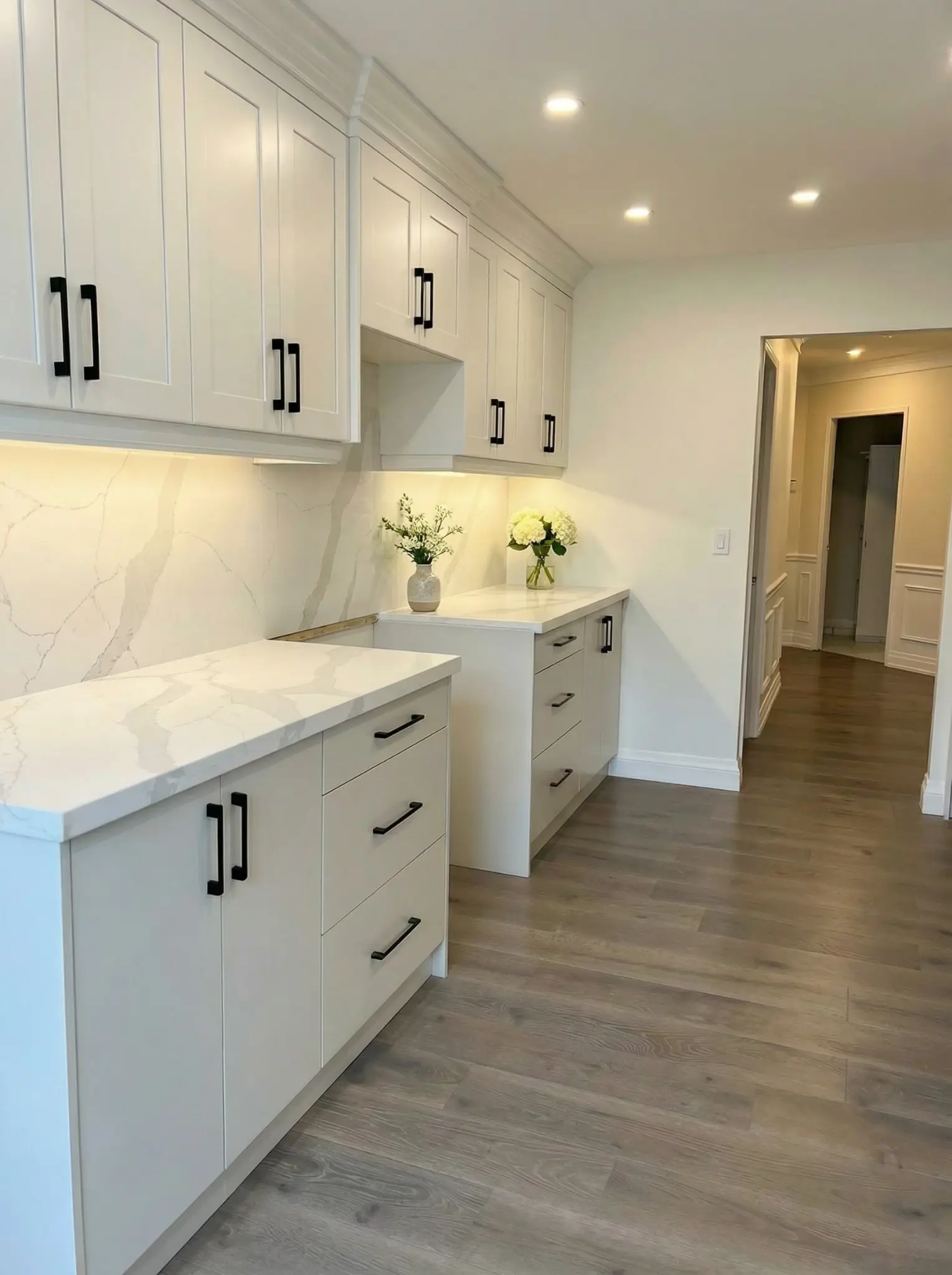
Kitchen cabinets take a lot of daily wear — moisture, heat, grease, and constant opening and closing. Sometimes a simple refresh like new paint or hardware is enough to buy years of life. Other times, the cabinets have reached the point where replacement is the smarter, more cost-effective move. Here are five clear signs it's time for new cabinetry, plus how to decide between repairing and replacing.
1. Water damage or swelling
This is the most common reason cabinets fail. If the cabinet boxes or doors are swelling, delaminating, or feel soft and spongy to the touch, moisture has gotten into the material. Once the structure is compromised, refinishing or repainting only hides the problem — it doesn't fix it. Swollen particleboard won't return to shape, and the damage tends to spread. In these cases, replacement is the reliable long-term fix.
2. Doors and drawers no longer work properly
Cabinets are only as good as their moving parts. Doors that constantly stick or hang crooked, drawers that won't slide or close, and hinges that keep loosening are all signs of wear. A one-off repair is fine, but if you find yourself fixing the same problems over and over — or if the boxes themselves are racking out of square — the cabinets are telling you they've reached the end of their life.
3. The layout doesn't work for how you live
Not every reason to replace is about damage. If your kitchen is short on storage, has awkward dead corners, or the layout simply fights you every time you cook, new cabinetry is an opportunity to redesign around your real needs. Modern cabinets offer smart storage — deep drawers, pull-outs, corner solutions, and pantry units — that older kitchens often lack entirely. If you're constantly frustrated by the layout, that frustration is worth solving.
4. Persistent odours, mould, or pests
Lingering smells or visible mould inside cabinets are more than an annoyance — they're a sign the material has absorbed moisture and may be harbouring bacteria. Mould inside cabinet boxes is difficult to fully remove from porous material, and it can affect indoor air quality. Similarly, if pests have gotten into damaged cabinets, replacement is often the cleanest solution. Your kitchen should be a healthy space, and this is a clear case for new cabinetry.
5. You're renovating or planning to sell
The kitchen is one of the biggest factors in how a home shows and sells. Dated or worn cabinets can make an entire home feel older than it is, while updated cabinetry is one of the most reliable ways to boost appeal and value before listing. If you're already renovating other parts of the kitchen — new counters, flooring, or appliances — it's usually the right time to address the cabinets too, so everything works together and you're not paying twice for labour.
Repair or replace? A quick gut-check
Not sure which way to go? A simple rule of thumb helps: if the cabinet boxes are structurally sound and you mainly dislike the look, a refresh (paint, new doors, or new hardware) is often enough. If the boxes are damaged, mouldy, or falling apart — or the layout genuinely doesn't work — replacement is the better investment.
- Lean toward a refresh: boxes are solid, you just want a new look
- Lean toward replacement: water damage, mould, failing structure, or a poor layout
- Either way: get a professional opinion before spending money on repairs
If a few of these signs sound familiar, it may be time for a change. Book a free quote and we'll give you an honest recommendation — repair or replace — based on what's actually going on with your cabinets.
Ready to start your project?
Get a free, no-obligation quote for your kitchen or bathroom.
Get a Free Quote